Sarah Churchwell’s essay from 5 years ago can help clarify why all those speakers are correct in identifying Trump as a Fascist ideologue. It was never a case of saying Trump is our Hitler. Fascism is always rooted in the history and culture out of which it emerges as a political movement.
I think one of the serious misunderstandings in our divided country, when it comes to the belief that Trump is a fascist is that supporters of Trump immediately equate it with meaning the same as “Trump is another Hitler”.
The paragraphs I’ve excerpted below, from Churchwell’s 2020 essay, can clarify why people have been both willing, and accurately able to, identify Trump as fascist and MAGA as a fascist political movement. It’s become “just another dirty word for Trump”, but it isn’t a dirty word. It’s an accurate statement. Once you understand the elements that define fascism, and once one recognizes fascism will be Americanized when it appears in the United States. Foucus on those two things, the elements that describe fascism, and what an Americanized “specie” of fascism would look like. I knew Jimmy Woods very well, years ago. He’s a genius, crazy high IQ, but that doesn’t make him enlightened.
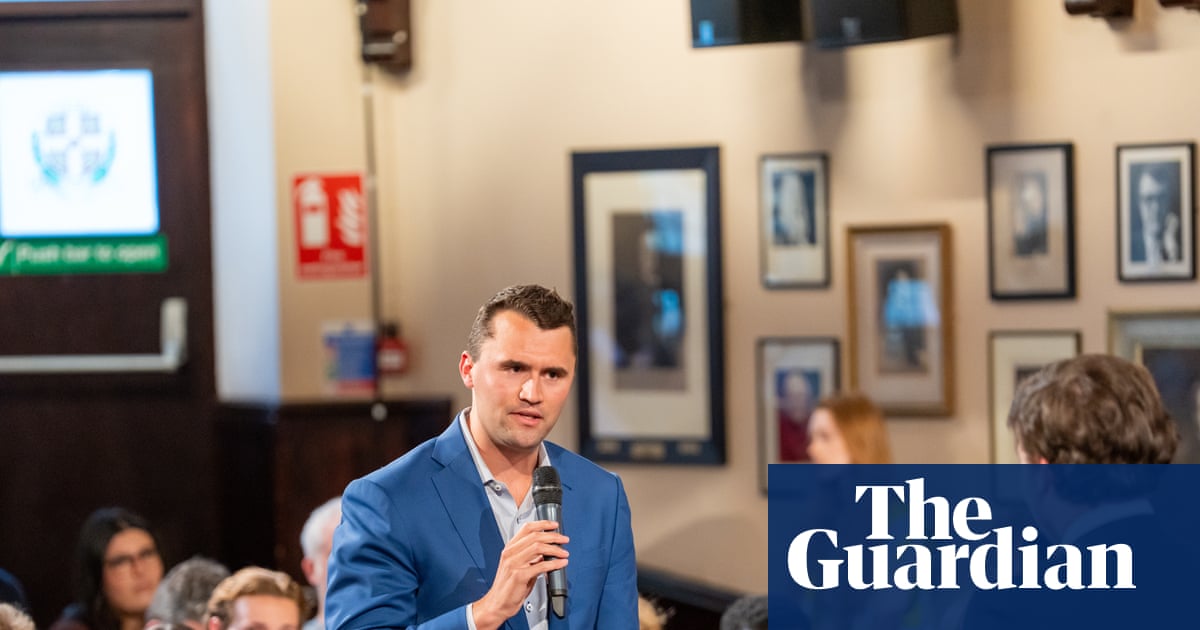
Telling the truth about Trump is not the cause of Charlie Kirk being murdered.
“American Fascism: It Has Happenned Here”
“An American fascism would, by definition, deploy American symbols and American slogans. “Do not look for them to raise aloft the swastika,” Wise warned, “or to employ any of the popular forms of Fascism” from Europe. Fascism’s ultra-nationalism means that it works by normalizing itself, drawing on familiar national customs to insist it is merely conducting political business as usual.
Samuel Moyn recently argued
in these pages against comparing Trump’s policies to fascism, because his administration is “pursuing causes with roots deep in American history. No analogy to Hitler or fascism is needed to explain these results.” But this presumes that fascism does not have its own deep roots in American history. It is arguable—not to say, exceptionalist—to presuppose that anything indigenously American cannot be fascist; this begs the question of American fascism rather than disputing it. Experts on fascism such as Robert O. Paxton, Roger Griffin, and Stanley G. Payne have long argued that fascism can never seem alien to its followers; its claims to speak for “the people” and to restore national greatness mean that each version of fascism must have its own local identity. To believe that a nationalist movement isn’t fascist because its native is to miss the point entirely.
THIS: Paxton has argued influentially that fascism is as fascism does. But conspicuous features are recognizably shared, including: nostalgia for a purer, mythic, often rural past; cults of tradition and cultural regeneration; paramilitary groups; the delegitimizing of political opponents and demonization of critics; the universalizing of some groups as authentically national, while dehumanizing all other groups; hostility to intellectualism and attacks on a free press; anti-modernism; fetishized patriarchal masculinity; and a distressed sense of victimhood and collective grievance. Fascist mythologies often incorporate a notion of cleansing, an exclusionary defense against racial or cultural contamination, and related eugenicist preferences for certain “bloodlines” over others. Fascism weaponizes identity, validating the
herrenvolk and invalidating all the other folk”.
(Red: Tell me that last paragraph does not include very familiar elements seen in Trump’s movement. It describes many of the recognizable elements of the MAGA movement and is largely behind why the American citizens that Woods is singling out to quote, and to blame, for Charlie Kirk’s death, are only stating what is obvious to millions of Americans).