
You are using an out of date browser. It may not display this or other websites correctly.
You should upgrade or use an alternative browser.
You should upgrade or use an alternative browser.
Countdown to Trump using the military against Americans
- Thread starter str8line
- Start date

Sardines
Well-Known Member
Almost 250 years...We didn't have to wait long did we?

Red
Well-Known Member
If, or when, Trump’s power is threatened:
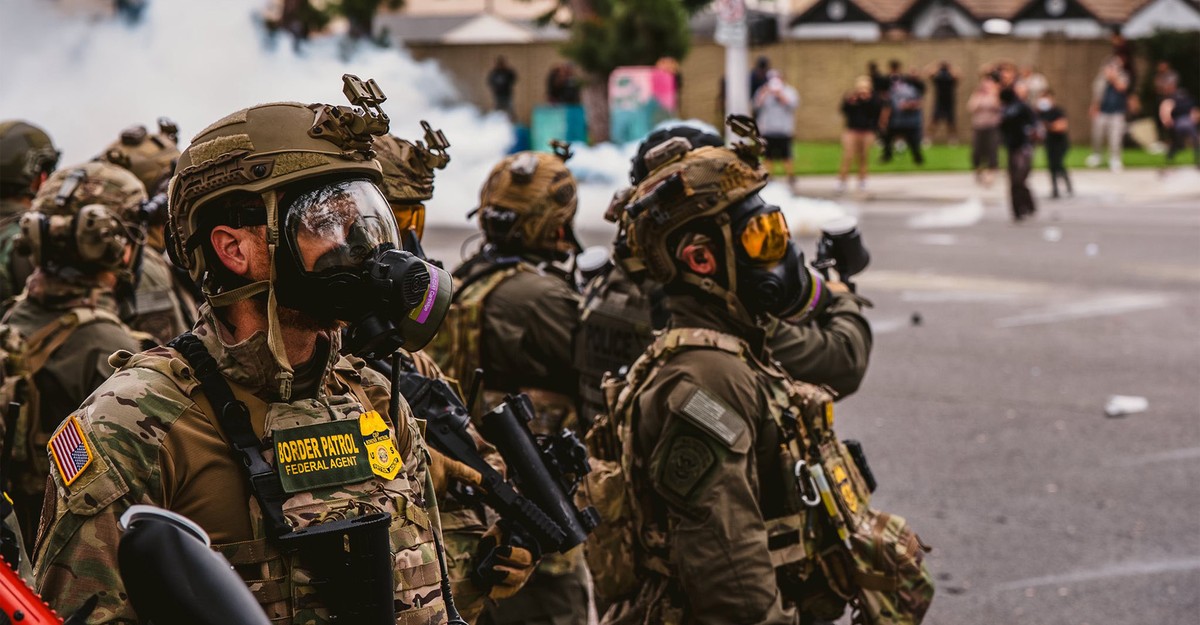
 www.theatlantic.com
But if the Trump-Hegseth threats have little purpose as law enforcement, they signify great purpose as political strategy. Since Trump’s reelection, close observers of his presidency have feared a specific sequence of events that could play out ahead of midterm voting in 2026:
Step 1: Use federal powers in ways to provoke some kind of made-for-TV disturbance—flames, smoke, loud noises, waving of foreign flags.
Step 2: Invoke the disturbance to declare a state of emergency and deploy federal troops.
Step 3: Seize control of local operations of government—policing in June 2025; voting in November 2026.
Some of Trump’s most fervent supporters urged him to follow this plan in November 2020. But in 2020, they waited too long—until after the votes were cast. Using the military to overturn an election already completed was too extreme a step for a Department of Defense headed by a law-respecting Cabinet secretary such as Mark Esper. Trump looked to the courts instead. Only after the courts disappointed him did Trump attempt violence, and then the only available tool of violence was the lightly armed mob he summoned to Washington, D.C., on January 6, 2021. Harrowing as those events were, they never stood much chance of success: Without the support of any element of the military, Trump’s rioters could not impose the outcome Trump wanted.
But the methods Trump threatened in Los Angeles this weekend could be much more effective in November 2026 than the attempted civilian coup of January 2021.
If Trump can incite disturbances in blue states before the midterm elections, he can assert emergency powers to impose federal control over the voting process, which is to say his control. Or he might suspend voting until, in his opinion, order has been restored. Either way, blue-state seats could be rendered vacant for some time.
For Trump, This Is a Dress Rehearsal
Ordering the National Guard to deploy in Los Angeles is a warning of what to expect when his hold on power is threatened.
www.theatlantic.com
But if the Trump-Hegseth threats have little purpose as law enforcement, they signify great purpose as political strategy. Since Trump’s reelection, close observers of his presidency have feared a specific sequence of events that could play out ahead of midterm voting in 2026:
Step 1: Use federal powers in ways to provoke some kind of made-for-TV disturbance—flames, smoke, loud noises, waving of foreign flags.
Step 2: Invoke the disturbance to declare a state of emergency and deploy federal troops.
Step 3: Seize control of local operations of government—policing in June 2025; voting in November 2026.
Some of Trump’s most fervent supporters urged him to follow this plan in November 2020. But in 2020, they waited too long—until after the votes were cast. Using the military to overturn an election already completed was too extreme a step for a Department of Defense headed by a law-respecting Cabinet secretary such as Mark Esper. Trump looked to the courts instead. Only after the courts disappointed him did Trump attempt violence, and then the only available tool of violence was the lightly armed mob he summoned to Washington, D.C., on January 6, 2021. Harrowing as those events were, they never stood much chance of success: Without the support of any element of the military, Trump’s rioters could not impose the outcome Trump wanted.
But the methods Trump threatened in Los Angeles this weekend could be much more effective in November 2026 than the attempted civilian coup of January 2021.
If Trump can incite disturbances in blue states before the midterm elections, he can assert emergency powers to impose federal control over the voting process, which is to say his control. Or he might suspend voting until, in his opinion, order has been restored. Either way, blue-state seats could be rendered vacant for some time.
Red
Well-Known Member
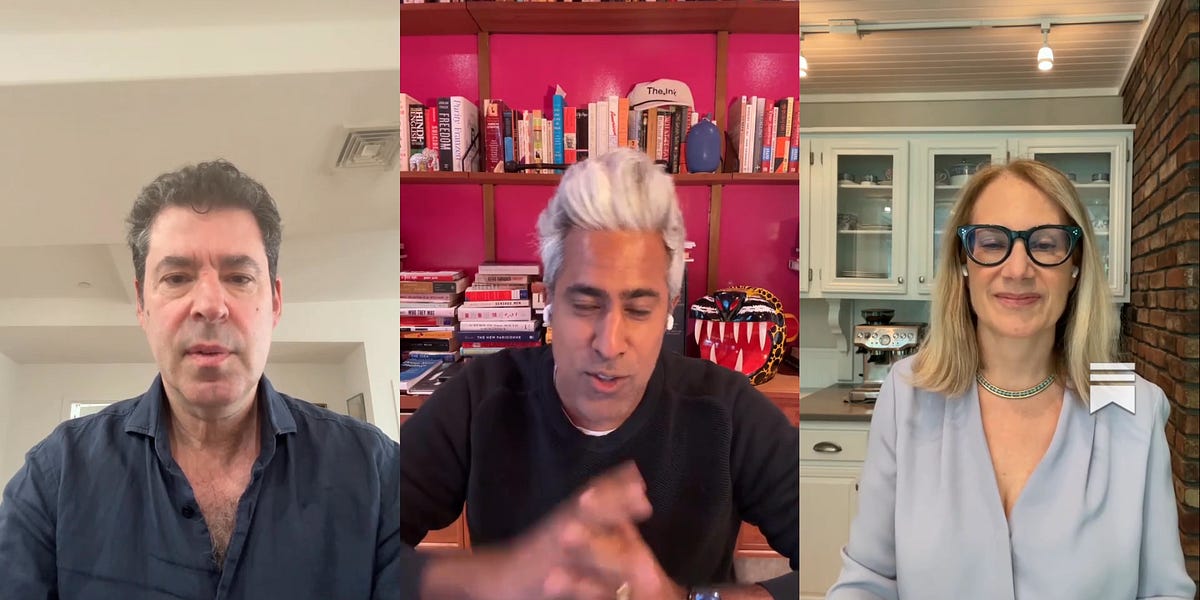
WATCH: Bursting the police state’s trial balloons
Ruth Ben-Ghiat and Jason Stanley on the reaction to the Los Angeles protests, Trump’s weakness, and why a mass movement is the only answer
 the.ink
To coin a proverb, one fascism scholar is an expert; two is an unlawful gathering. So today we talked with scholars of fascism Ruth Ben-Ghiat and Jason Stanley (and 4,100 readers) about whether Donald Trump’s disproportionate response to anti-ICE protests in Los Angeles puts the United States further down the path towards a police state — or opens up possibilities for an effective and sustained mass response.
Both suggest that Trump is over-responding to the Los Angeles protests as “insurance” — he’s not concerned these protests specifically; like the military parade planned for next week, it’s about habituating Americans to seeing force on the streets, to pressure people not to protect their neighbors and communities, because the regime is weak, not strong. And as benefits stop and the economy contracts, Ruth suggests, a reckoning — and a real mass movement — is on the way.
What does that look like? As Jason told us, it’s going to require something new. “Fascism is a revolution,” he says, “and you cannot defeat a revolution by returning to the status quo.” “When we resist,” says Ruth, “we’re modeling a different ethos — becoming part of something bigger.”
We’re keeping this video open to all.
Red
Well-Known Member

WATCH: Bursting the police state’s trial balloons
Ruth Ben-Ghiat and Jason Stanley on the reaction to the Los Angeles protests, Trump’s weakness, and why a mass movement is the only answer
To coin a proverb, one fascism scholar is an expert; two is an unlawful gathering. So today we talked with scholars of fascism Ruth Ben-Ghiat and Jason Stanley (and 4,100 readers) about whether Donald Trump’s disproportionate response to anti-ICE protests in Los Angeles puts the United States further down the path towards a police state — or opens up possibilities for an effective and sustained mass response.
Both suggest that Trump is over-responding to the Los Angeles protests as “insurance” — he’s not concerned these protests specifically; like the military parade planned for next week, it’s about habituating Americans to seeing force on the streets, to pressure people not to protect their neighbors and communities, because the regime is weak, not strong. And as benefits stop and the economy contracts, Ruth suggests, a reckoning — and a real mass movement — is on the way.
What does that look like? As Jason told us, it’s going to require something new. “Fascism is a revolution,” he says, “and you cannot defeat a revolution by returning to the status quo.” “When we resist,” says Ruth, “we’re modeling a different ethos — becoming part of something bigger.”
We’re keeping this video open to all.
100%. As everything with The Rapist it's a test to see what he can get away with and so far he's gotten away with assuming borderline unassailable power.
Last edited:
Red
Well-Known Member
It’s feels like we’re headed for a “something has to give” situation that will be jaw dropping. Very difficult years ahead.100%. As everything with The Rapist it's a test to see what he can get away with and so far he's gotten away with assuming borderline unassailable power.
Red
Well-Known Member
It’s feels like we’re headed for a “something has to give” situation that will be jaw dropping. Very difficult years ahead.
I agree. Just because we are the USA doesn't make us any different than Turkey or Hungary where elections mean nothing and dictators rule. Now The Rapist has sent in active military Marines. What are the odds there's an honest election in 2028? Or even 2026?
Sardines
Well-Known Member
I honestly thought that such orders would be disobeyed. I suppose the Marines haven't killed any U.S. civilians yet. I guess I'll wait to be horrified when that happens.I agree. Just because we are the USA doesn't make us any different than Turkey or Hungary where elections mean nothing and dictators rule. Now The Rapist has sent in active military Marines. What are the odds there's an honest election in 2028? Or even 2026?
Standing by to stand by.