What's new

The Climate Change Thread

Committing crimes against humanity’s future….


The environmental rollbacks came one after the next this week, potentially affecting everything from the survival of rare whales to the health of the Hudson River.

On Monday, the Environmental Protection Agency proposed to strip federal protections from millions of acres of wetlands and streams, narrowing the reach of the Clean Water Act.

On Wednesday, federal wildlife agencies announced changes to the Endangered Species Act that could make it harder to rescue endangered species from the brink of extinction.

And on Thursday, the Interior Department moved to allow new oil and gas drilling across nearly 1.3 billion acres of U.S. coastal waters, including a remote region in the high Arctic where drilling has never before taken place.

If the Trump administration’s proposals are finalized and upheld in court, they could reshape U.S. environmental policy for years to come, environmental lawyers and activists said.

“This was the week from hell for environmental policy in the United States,” said Pat Parenteau, a professor emeritus and senior fellow for climate policy at Vermont Law and Graduate School. “Unless stopped by the courts, each of these proposed rollbacks will do irreparable harm to the nation’s water quality, endangered species and marine ecosystems.”

The quick pace of these proposals was notable, even for an administration that has enacted Mr. Trump’s agenda at breakneck speed.
While the administration was working in Washington to dismantle environmental protections, 3,300 miles to the south, negotiators from nearly 200 nations were trying to improve the planet’s health at the United Nations climate summit in Brazil.

A White House official, who declined to be identified, said the timing was unrelated to the U.N. climate summit, which the Trump administration boycotted this year. It was the first time since the annual summits began 30 years ago that the United States was not present.

“The Trump administration unveiled many historic announcements this week to further President Trump’s American energy dominance agenda,” Taylor Rogers, a White House spokeswoman, said in an email. “President Trump serves the American people, not radical climate activists who have fallen victim to the biggest scam of the century.”

A range of industries supported the changes, including groups representing farmers, oil drillers, chemical manufacturers, home builders and real estate developers.

“The developments this week were definitely major steps toward the administration’s goal of achieving and restoring American energy dominance and manufacturing dominance as well,” said Chris Phalen, vice president of domestic policy at the National Association of Manufacturers, a trade group. “We’re definitely very pleased with what came out.”

The E.P.A. kicked off the wave of deregulation on Monday, when it proposed to significantly scale back the Clean Water Act, which Congress passed in 1972 to protect all “waters of the United States” from pollution or destruction.

The agency said it would more narrowly define “waters of the United States” to exclude many wetlands and streams across the country. The changes could strip federal protections from up to 55 million acres of wetlands, or about 85 percent of all wetlands nationwide, according to the Natural Resources Defense Council, an environmental group.
 

Silicon Valley VC talking about natural gas (not normal). Demand about to go through the roof due to AI. The new fear is LNG may be overcapitalized as exports drop due to new domestic demand.
 
  • Like
Reactions: Red

Silicon Valley VC talking about natural gas (not normal). Demand about to go through the roof due to AI. The new fear is LNG may be overcapitalized as exports drop due to new domestic demand.
AI increases the demand for LNG? They using LNG to power data centers or whatever it is you call an AI farm?
 
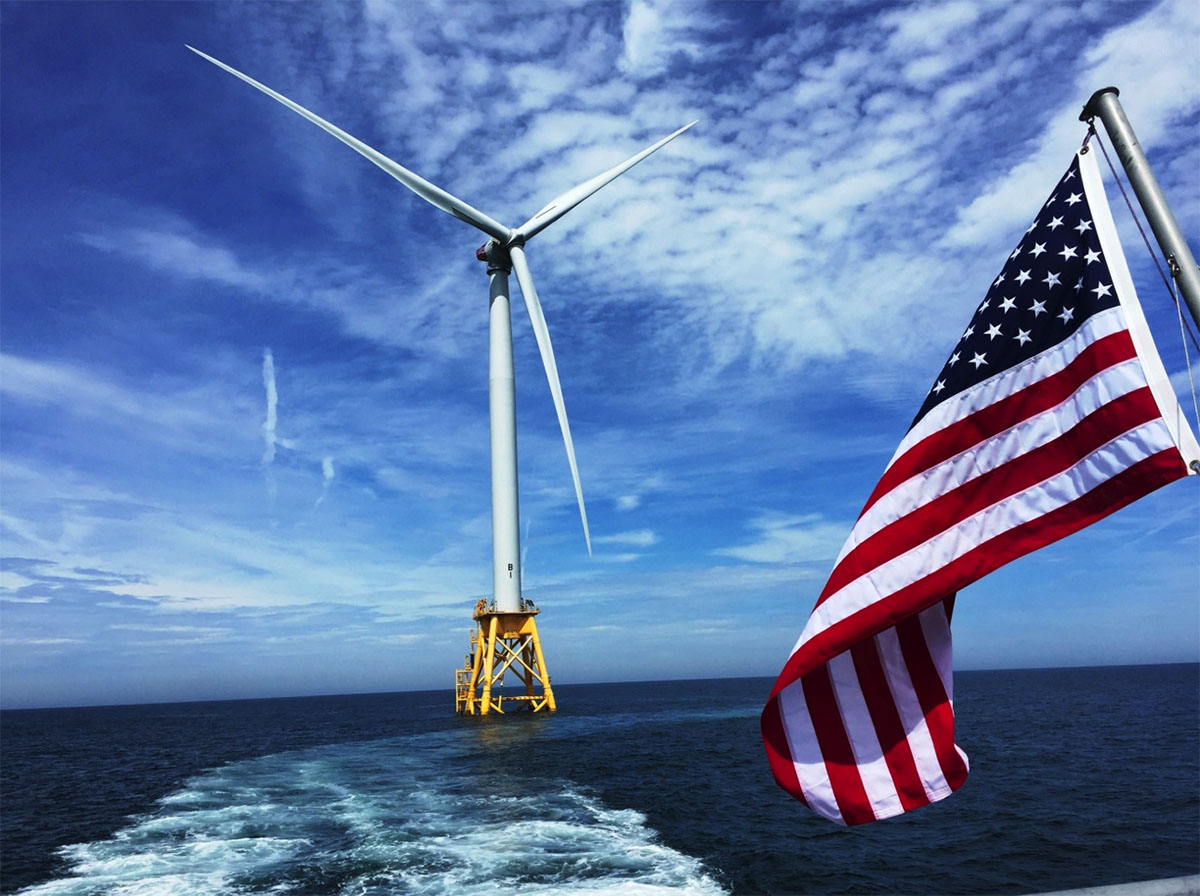
Trump is also trying to end the offshore wind industry. It’s green, renewable, would provide electricity to one million southern New England homes, and Trump hates renewable energy sources. Using a suit by a group claiming the wind turbines endanger Right Whales, in order to reconsider the application, and in order to kill it.


The US Department of Justice (DOJ) has asked a federal court to remand the federal approval of the New England Wind offshore wind project to the Bureau of Ocean Energy Management (BOEM), which issued it last year and now wants to conduct further review, according to a filing submitted on 2 December in the US District Court for the District of Columbia.

In the filing, the DOJ, on behalf of the Federal Defendants in a lawsuit launched earlier this year by the organisation Ack for Whales, states that BOEM is now reconsidering its July 2024 approval of the project’s Construction and Operations Plan (COP).

BOEM says the previous decision “may have failed to account for all the impacts”required under subsection 8(p)(4) of the Outer Continental Shelf Lands Act and that the record materials “may have understated impacts” that were weighed in the approval. The agency says it intends to issue a new COP decision after its re-evaluation.

The motion cites the January 2025 Presidential Memorandum directing a federal review of offshore wind leasing and permitting, the May 2025 withdrawal of the Anderson legal opinion and reinstatement of the Jorjani opinion on OCSLA 8(p)(4), and a July 2025 Secretary of the Interior order directing reconsideration of approvals associated with wind projects.
—————————————————————————-

Both the local fishing industry, and environmentalists, oppose the wind project. Personally, I am not as up on these issues as I should be.


I didn’t make up the problems,” Butler wrote in an essay for Essence in 2000. “All I did was look around at the problems we’re neglecting now and give them about 30 years to grow into full-fledged disasters.” That same year, she said in an interview that she dearly hoped she was not prophesying anything at all; that among other social ills, climate change would become a disaster only if it was allowed to fester. “I hope, of course, that we will be smarter than that,” Butler said six years before her death, in 2006.

What will our “full-fledged disasters” be in three decades, as the planet continues to warm? The year 2024 was the hottest on record. Yet 2025 has been perhaps the single most devastating year in the fight for a livable planet. An authoritarian American president has pressed what can only be described as a policy of climate-change acceleration—destroying commitments to clean energy and pushing for more oil production. It doesn’t require an oracle to see where this trajectory might lead.

Taking our cue from Butler, we would do well today to study the ways that climate change has already reshaped the American landscape, and how disasters are hollowing out neighborhoods like the one where Butler is buried. We should understand how catastrophe works in a landscape of inequality.

Over the next 30 years or so, the changes to American life might be short of apocalyptic. But miles of heartbreak lie between here and the apocalypse, and the future toward which we are heading will mean heartbreak for millions. Many people will go in search of new homes in cooler, more predictable places. Those travelers will leave behind growing portions of America where services and comforts will be in short supply—let’s call them “dead zones.” Should the demolition of America’s rule of law continue, authoritarianism and climate change will reinforce each other, a vicious spiral from which it will be difficult to exit.

How do we know this? As ever, all it takes is looking around.


(Sounds like I’m on a front line):

The US region called New England is widely known for its colonial history, maple syrup and frigid, snow-bound winters. Many of these norms are in the process of being upended, however, by a rapidly altering climate, with new research finding the area is heating up faster than almost anywhere else on Earth.

The breakneck speed of New England’s transformation makes it the fastest-heating area of the US, bar the Alaskan Arctic, and the pace of its temperature rise has apparently increased in the past five years, according to the study.

“The temperature is not only increasing, it’s accelerating,” said Stephen Young, a climate researcher at Salem State University, who conducted the study, published in the Climate journal, with his son Joshua Young.

“It’s really sped up in recent years, which surprised me. Our climate is moving in a new direction, after being relatively stable in the past 10,000 years”.
 
Last edited:
Back
Top