What's new

Venezuela

CNN article points out what I’ve concluded, and mentioned several times:Trump’s corollary to the Monroe Doctrine involves Trump dictating what is allowable in the Western Hemisphere. Three great influence zones, in Trump’s view of the world: China in Asia, Putin and Russia in Europe, and Trump in the Western Hemisphere. This general idea is behind the demand that Greenland belong to the United States, and is behind Trump deciding Maduro had to go.


Expressions of unbridled power don’t come blunter than abducting a sitting president from his capital in the dead of night.

President Donald Trump has shown in a 74-word social media post that he can act decisively, suddenly and perhaps recklessly, in pursuit of his varied and varying foreign policy goals, with little regard for precedent, consequence or it seems, international law.…..

Deep in the heart of this staggering operation lies Washington’s wider ambitions for greater control of its near-abroad, for what they have termed an updated Monroe Doctrine – with a “Trump Corollary”, to quote the latest White House National Security Strategy. They’ve offered bail out libertarian Argentinian president Javier Milei, scolded leftist Colombia leader Gustavo Petro, clashed with Brazil’s Lula and cosied up to El Salvador’s authoritarian Bukele. But the Caracas operation is not a rhetorical slight, rather the violent extraction of a political irritant.

A pliant Venezuela is better for US hydrocarbon markets, yet oil is less the guiding light of foreign policy in the United States, now a top producer itself. This is not 2003. Venezuela’s resources would be helpful, but not the golden amulet its opposition leader Maria Corina Machado has touted.

A key, real Trump “corollary” to this action, is migration. At least 700,000 Venezuelans migrants are in the United States, despite a recent bid to remove their temporary protected status. A stable, prosperous and calm Venezuela is a place they could be returned to, forcibly or willingly. But we are far from that moment on Saturday morning.

As it stands, what comes next is wildly unclear. Delcy Rodriguez, the vice president, is likely Maduro’s successor, but will she be willing to stomach the same risk of abduction, or seek an immediate détente with the White House? On the streets of Venezuela, it is also uncertain if this ignites anti-American fury as the toll of the operation becomes clear, or ushers in days of celebration at the end of a dictatorship that has mismanaged Venezuelans’ economy into freefall.
 
On the one hand:


On the other hand, bs from Trump. Machado certainly has respect. Her surrogate candidate won the election that Maduro stole.


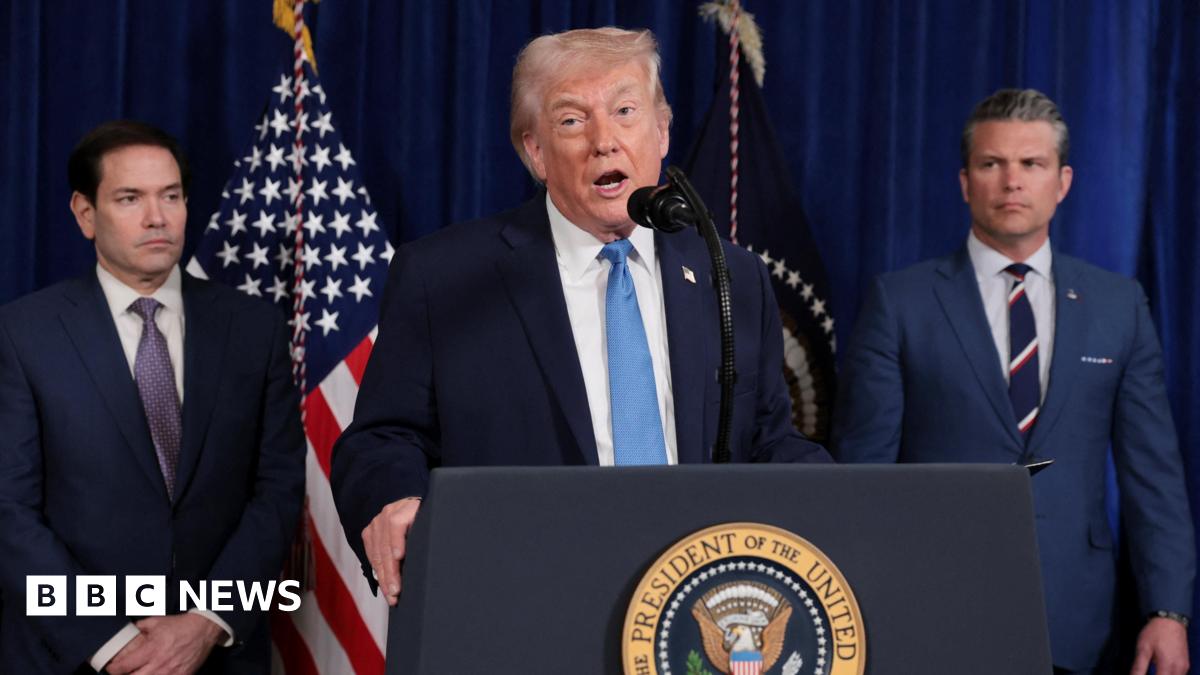
US President Donald Trump on Saturday brushed aside Nobel Peace Prize-winning opposition leader Maria Corina Machado as a potential interim leader of Venezuela, as he said Washington was working with deposed Nicolas Maduro's vice president.

"I think it would be very tough for her to be the leader. She doesn't have the support within or the respect within the country," Trump told a news conference.

"She's a very nice woman, but she doesn't have the respect."


During the news conference, a reporter asked Donald Trump about what could generously be described as America’s spotty record when it comes to triggering, and dealing with the consequences of, regime change in foreign nations.

Trump had a simple answer. His administration, he said, has a “perfect track record of winning”.

It may not be that simple, however.

The Venezuelan economy is in shambles. Its industrial infrastructure is outdated and decrepit. Its political stability has been undermined by decades of increasingly authoritarian rule.

Trump promised that the US is going to do what’s necessary to “make Venezuela great again”. He promised to “rebuild their whole infrastructure”. But that will take considerable American time and effort including, Trump said, the possibility of US military personnel on the ground in Venezuela.

It’s a dramatic reversal for a man who had criticised, in the past, US regime-change and nation-building efforts elsewhere in the world.

Just over two decades ago, American leaders made similar assurances about the ease - and potential benefits - of US regime change in Iraq. While every war and every nation is difference, less than a year into Trump’s second term he is taking on a monumental task - and staking his presidency on its success.
 
Last edited:

The experts the Guardian spoke to agreed that the US is likely to have violated the terms of the UN charter, which was signed in October 1945 and designed to prevent another conflict on the scale of the second world war. A central provision of this agreement – known as article 2(4) – rules that states must refrain from using military force against other countries and must respect their sovereignty.

“The reality is that America is in breach of the United Nations charter,” he added. “It has committed the crime of aggression, which the court at Nuremberg described as the supreme crime, it’s the worst crime of all.”

Elvira Domínguez-Redondo, a professor of international law at Kingston University, described the operation as a “crime of aggression and unlawful use of force against another country”. Susan Breau, a professor of international law and a senior associate research fellow at the Institute of Advanced Legal Studies, agreed that the attack could have only been considered lawful if the US had a resolution from the UN security council or was acting in self-defence. “There is just no evidence whatsoever on either of those fronts,” Breau said.

The UN security council can impose sanctions on countries in an attempt to maintain peace. These can include trade restrictions, arms embargos and travel bans. However, five members of the council – the US, China, Russia, the UK and France – have a veto on this. (lol)
“Sanctions have to be imposed by the security council and America is a member with a veto,” Robertson said. “This is important, because it shows the security council is a worthless body. A country which breaks international law can avoid condemnation simply by vetoing it … the only body that can act will be eviscerated by the American veto.”
Domínguez-Redondo described the situation as “impossible”. “If the security council cannot decide on sanctions, the countries can choose whether or not to follow them,” she said. “Because the US has veto power, the sanctions are never going to be decided there.”

If the US faces no consequences for the invasion of Venezuela, experts believe it could embolden other countries to carry out operations which may contravene international law.

“The most obvious consequence is that China will take the opportunity to invade Taiwan,” Robertson said. “This is the most appropriate time for it to do so, bolstered by the precedent of Trump’s invasion of Venezuela and of course his appeasement of Russia in its invasion of Ukraine. In fact, I would say that Trump’s invasion of Venezuela is the crime of aggression, the same crime Putin has committed by invading Ukraine.”

Domínguez-Redondo added that it could further weaken the UN security council. “The security council was the prevention mechanism for the third world war,” she said. “This has been completely dismantled, mainly by the US.
 
Wow Trump has turned the United States into a criminal gang of thugs.
I am afraid it will spill over to the north of USA - Greenland and Canada being easy targets, and USA eventually destroying NATO as we know it, that could lead to WW3 and so on..... Australia or NZ business immigration program suddenly looks very appealing. I would like to be as far away from orange clown circus as possible. Or maybe they will accept Canadians as refuges?
 

The experts the Guardian spoke to agreed that the US is likely to have violated the terms of the UN charter, which was signed in October 1945 and designed to prevent another conflict on the scale of the second world war. A central provision of this agreement – known as article 2(4) – rules that states must refrain from using military force against other countries and must respect their sovereignty.

“The reality is that America is in breach of the United Nations charter,” he added. “It has committed the crime of aggression, which the court at Nuremberg described as the supreme crime, it’s the worst crime of all.”

Elvira Domínguez-Redondo, a professor of international law at Kingston University, described the operation as a “crime of aggression and unlawful use of force against another country”. Susan Breau, a professor of international law and a senior associate research fellow at the Institute of Advanced Legal Studies, agreed that the attack could have only been considered lawful if the US had a resolution from the UN security council or was acting in self-defence. “There is just no evidence whatsoever on either of those fronts,” Breau said.

The UN security council can impose sanctions on countries in an attempt to maintain peace. These can include trade restrictions, arms embargos and travel bans. However, five members of the council – the US, China, Russia, the UK and France – have a veto on this. (lol)
“Sanctions have to be imposed by the security council and America is a member with a veto,” Robertson said. “This is important, because it shows the security council is a worthless body. A country which breaks international law can avoid condemnation simply by vetoing it … the only body that can act will be eviscerated by the American veto.”
Domínguez-Redondo described the situation as “impossible”. “If the security council cannot decide on sanctions, the countries can choose whether or not to follow them,” she said. “Because the US has veto power, the sanctions are never going to be decided there.”

If the US faces no consequences for the invasion of Venezuela, experts believe it could embolden other countries to carry out operations which may contravene international law.

“The most obvious consequence is that China will take the opportunity to invade Taiwan,” Robertson said. “This is the most appropriate time for it to do so, bolstered by the precedent of Trump’s invasion of Venezuela and of course his appeasement of Russia in its invasion of Ukraine. In fact, I would say that Trump’s invasion of Venezuela is the crime of aggression, the same crime Putin has committed by invading Ukraine.”

Domínguez-Redondo added that it could further weaken the UN security council. “The security council was the prevention mechanism for the third world war,” she said. “This has been completely dismantled, mainly by the US.
Can you imagine the U.S. being subject to sanctions and embargos? Xi Jinping would die laughing.

Through our actions in Venezuela we are providing excuses for Russia's invasion of Ukraine and eventually China's invasion of Taiwan.

It used to be a no-no to take unprovoked military action. Even before the second Gulf War the U.S. made their case. It might have been B.S. but the U.S. followed protocol before invading Iraq.

The world is now less safe and it is because of Trump.
 
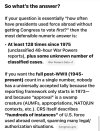
IMG_6912.jpegI was curious how many times a US president has had the military conduct an operation abroad without the vote of congress. I was surprised to see since 1975 there have been 128 such occasions.

Also i was curious if the US has kidnapped a sitting president/leader of a nation before. I guess technically it has happened twice, once in 1989 and 2004 though obviously different circumstances. The 2nd and 3rd order consequences of events at this scale are not easy to predict with uber high variability. A real roll of the dice.

Personally, it would seem to me most US meddling in foreign affairs since the end of WW2 has been a disaster. I suppose one could craft a solid defense of the Korean war. But Vietnam makes me sick. and our involvement in the middle east was real dumb. Trillions of tax dollars and countless deaths just to replace the Taliban with the Taliban. The Bush administration and the republican neocons were awful.

I guess we'll see how this plays out
 
The Donroe Doctrine.


It was clear after the release of the 2025 National Security Strategy that this administration was going to shred the inhibitions imposed by international law and opt for the more liberating costumery of gangsterism. In the Western Hemisphere, the United States would assert its muscle and dictate terms, as it has done previously, to countries in Latin America. Washington desired “a Hemisphere whose governments cooperate with us against narco-terrorists, cartels, and other transnational criminal organizations”, one “that remains free of hostile foreign incursion or ownership of key assets, and that supports critical supply chains” and ensured “continued access to key strategic locations. In other words, we will assert and enforce a ‘Trump Corollary’ to the Monroe Doctrine.”

Venezuela has become the first target of this corollary. On January 3, a little after 2 am local time, Caracas, and other sites in the country, were attacked by US forces as part of Operation Absolute Resolve. By 4:21 am, Trump announced that the Venezuelan President Nicolás Maduro and his wife Cilia Flores had been captured. The Joint Chiefs Chairman Gen. Dan Caine, at a press conference held at the President’s Florida compound, spoke of, “An extraction so precise it involved more than 150 aircraft launching across the Western Hemisphere in close coordination, all coming together in time and place to layer effects for a single purpose, to get an interdiction force into downtown Caracas while maintaining the element of tactical surprise.”
 
Back
Top